The short answer
With pets, cleaning is less about one big session and more about small, frequent routines: vacuum hair before it spreads, stop dirt at the door, clean accidents quickly, and wash pet bedding on a schedule. For products, read every label, follow dilution directions, keep pets away until floors and surfaces are dry, and ask your veterinarian if you are unsure about a specific product.
Dogs and cats make a house a home, and they also bring hair, dander, muddy paws, and the occasional accident. You do not need a spotless house to live well with pets, but a few habits make a big difference in how clean it feels, especially on floors and furniture.
A cleaning routine that works with pets
Daily or every other day
- Quick vacuum of the spots where your pet sleeps and the main walkways
- Wipe paws at the door on wet or muddy days
- Rinse food and water bowls
Weekly
- Full vacuum, including under furniture and along baseboards where hair collects
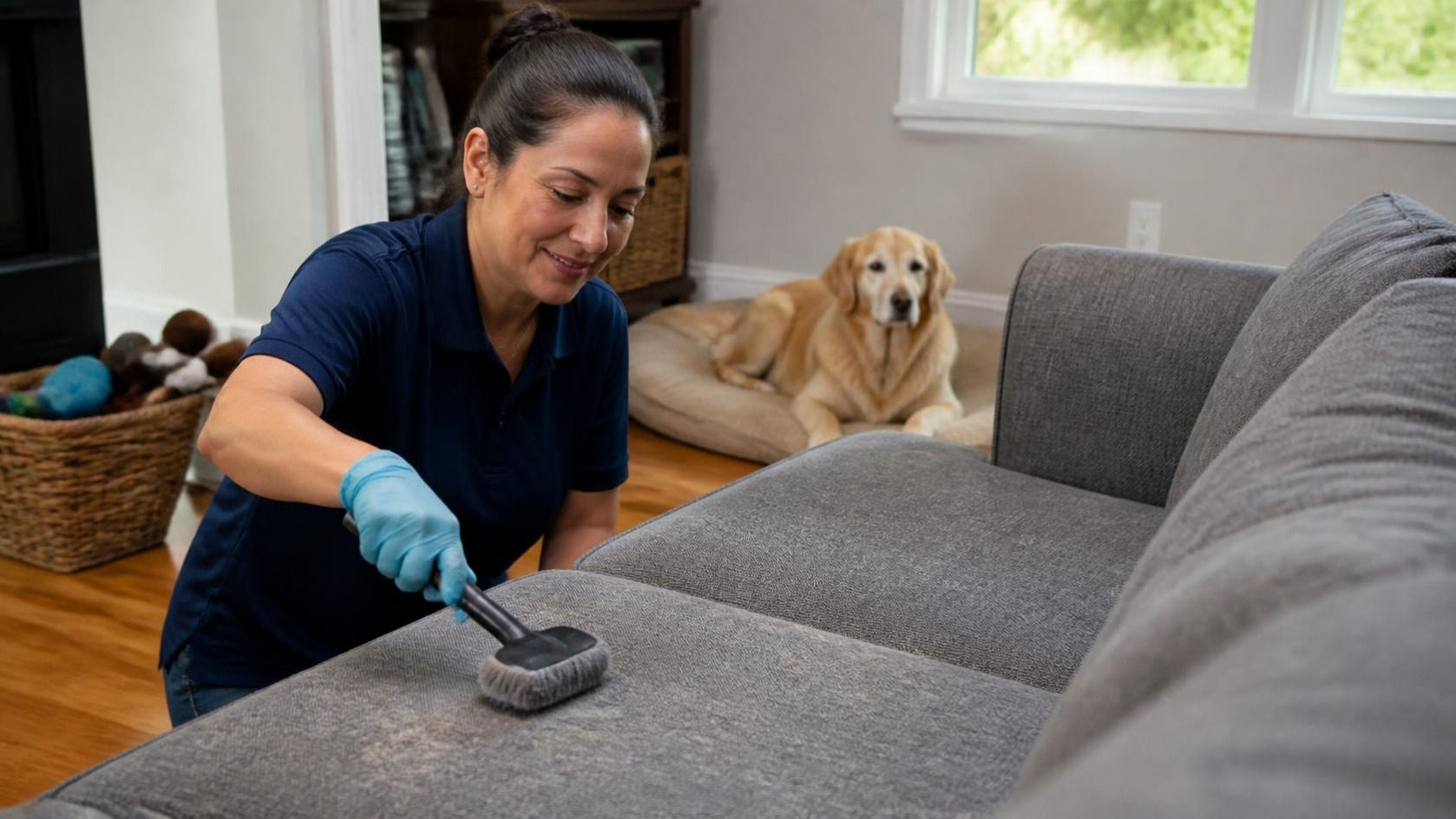
- Lift hair from upholstery with a rubber brush or damp rubber glove
- Mop hard floors and wipe low surfaces at nose height, like glass doors
- Wash pet bedding and throw blankets
As needed
- Clean accidents right away: blot, then use a cleaner made for pet stains
- Brush your pet regularly, ideally outside, so less hair ends up in the house
How can I tell if a cleaner is safe to use around pets?
There is no single label that guarantees a product is safe for every animal, so the practical approach is careful use:
- Read the label. Follow the manufacturer's directions, warnings, and dilution instructions.
- Let it dry. Keep pets off floors and surfaces until they are fully dry, since pets walk through and lick paws.
- Ventilate. Open a window or run a fan while cleaning.
- Store safely. Keep bottles closed and out of reach.
- Ask your vet. Cats in particular can be sensitive to some ingredients. Your veterinarian is the right source for your specific pet.
The same applies to questions like whether a particular floor cleaner is fine to use with a dog or cat: check the manufacturer's guidance for that product, use it as directed, and keep pets off until it dries.
Keeping a pet home smelling fresh
Odor usually comes from a few sources, not the whole house: bedding, rugs, upholstery, and spots where accidents happened. Washing bedding weekly, vacuuming fabric surfaces, cleaning accidents thoroughly, and airing out rooms tends to work better than covering smells. If you use fragrance products, check their labels for guidance about pets as well.
Preparing pets for cleaning day
- Tell us about your pets. We ask about pets when we confirm the scope and how the team will get in.
- Choose a spot. Many pets are calmer in a closed room, a crate, or on a walk while vacuums are running.
- Pick up toys and bowls. Clear floors let the team reach baseboards and corners.
- Flag sensitive areas. Let us know about litter boxes, cages, or tanks you would like left alone.
Homes with pets often benefit from more frequent visits. If you are deciding on a schedule, see is two hours a week enough for a house cleaner?
What is usually hardest to clean in a pet home?
Upholstered furniture and rugs, where hair weaves into fabric; baseboards and corners, where hair drifts and collects; and glass doors and low windows, where noses leave prints. These are the areas worth extra attention on your weekly pass.
House cleaning with pets in Brookfield
Our office is on Federal Road in Brookfield, and we clean homes with dogs and cats throughout town, from Brookfield Center to neighborhoods near Candlewood Lake, where wet paws are part of summer. For local details, see our house cleaning page for Brookfield, CT. We also serve Norwalk; see house cleaning in Norwalk.
Cleaning with pets questions
How do you clean your house when you have pets?
Use small, frequent routines: vacuum where pets sleep and walk, wipe paws at the door, lift hair from upholstery weekly, mop hard floors, wash pet bedding, and clean accidents right away.
How can I tell if a cleaning product is safe around pets?
Read and follow the label, dilute as directed, ventilate, keep pets away until surfaces are dry, store products out of reach, and ask your veterinarian about any product you are unsure of.
Can I mop with a regular floor cleaner if I have a dog or cat?
Check that product's label and the manufacturer's guidance, use it as directed, and keep pets off the floor until it is completely dry. Ask your vet if you have concerns about a specific product.
What should I do with my pets on cleaning day?
Tell us about your pets when you book. Many pets are more comfortable in a closed room, a crate, or out for a walk while the team works.