The short answer
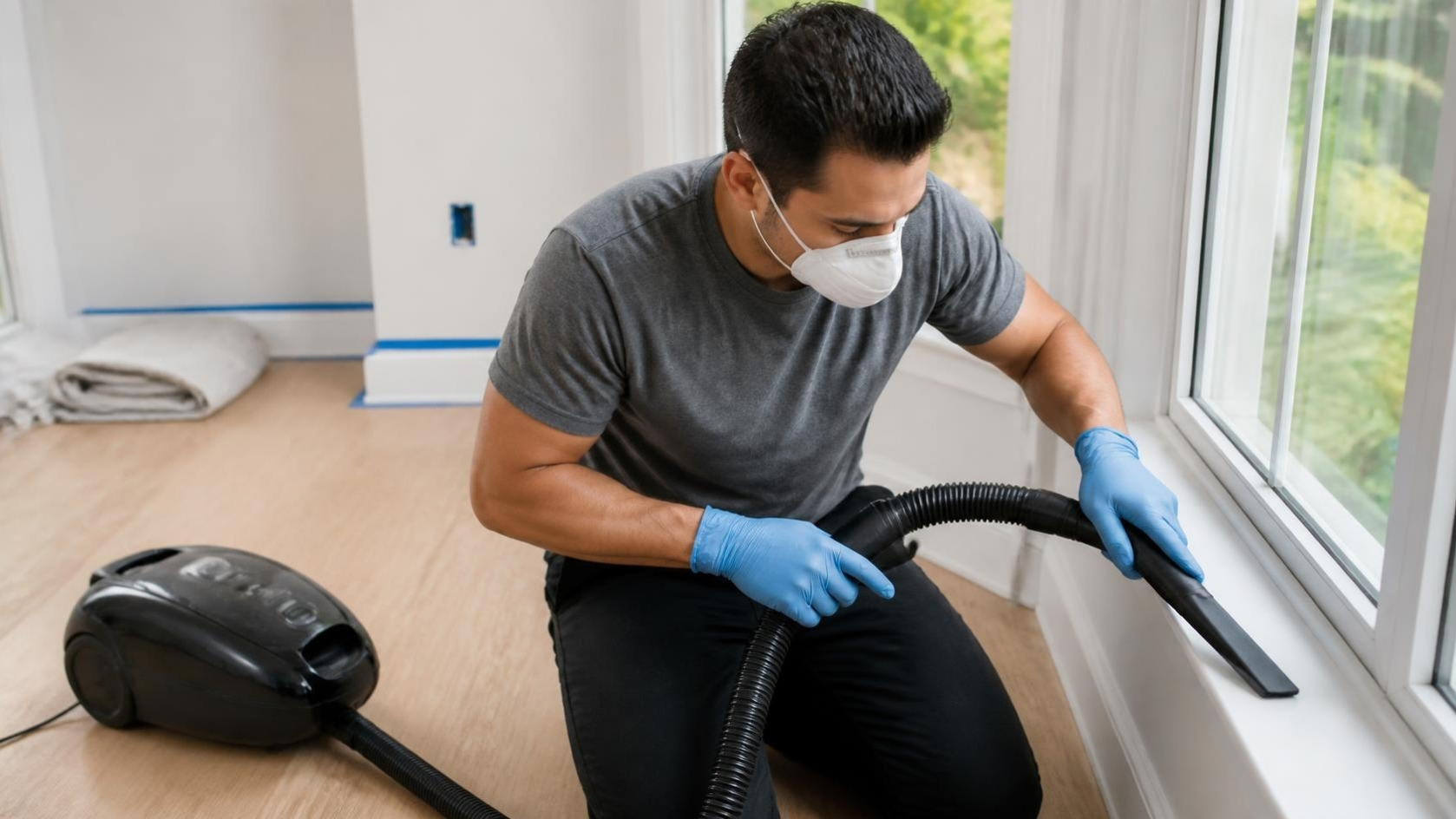
Renovation dust is finer than everyday dust, so it hangs in the air and settles again after you wipe. The way to beat it is to clean in two rounds: a rough clean once the trades finish their heavy work, and a final detail clean after paint, fixtures, and punch-list items are done. Work top to bottom, use a HEPA vacuum before any damp wiping, and do not dry-sweep.
A finished renovation should feel like a fresh start. Instead, many homeowners find a film of fine gray powder on every surface, and it seems to reappear a day after they wipe it away. That is not your imagination. Drywall sanding, sawdust, and grout dust are made of very fine particles that drift through the house and settle slowly.
Why renovation dust keeps coming back
- Particle size. Drywall and plaster dust is fine enough to stay airborne and settle for hours after work stops.
- Hidden reservoirs. Dust collects on top of door frames, inside vents and registers, in window tracks, and inside cabinets, then gets stirred back up.
- Air movement. Your heating or cooling system can move dust from the work area into rooms that were never touched.
What is the best way to clean after a renovation?
Professional post-construction cleaning follows a two-phase process. You can use the same logic yourself:
- Rough clean after the heavy trades. Remove small debris and packaging, vacuum up loose dust, and clean windows, frames, and tracks.
- Let the finishing work happen. Painting, fixtures, and punch-list items create a second wave of dust, so do not detail too early.
- Final clean, top to bottom. Dust walls, ceilings, and fixtures first, then vents, grilles, and registers, then inside cabinets and closets, then windows and mirrors, and floors last.
- HEPA before damp. Vacuum surfaces with a HEPA-filtered vacuum first, then follow with damp microfiber. Wiping first turns fine dust into paste.
Common post-construction cleaning mistakes
- Dry sweeping or feather dusting. It launches fine dust back into the air.
- Cleaning before the trades are done. A final clean before touch-up painting is wasted effort.
- Working bottom to top. Dust falls; floors should always come last.
- Forgetting the vents. Registers and grilles hold dust that blows out later.
- Using harsh products on new finishes. New hardwood, grout, stone, and fixtures can be sensitive. Check the manufacturer's care guidance first.
- Skipping the inside of cabinets and closets. Dust settles on every shelf, even behind closed doors.
It also helps to ask your contractor about the HVAC filter once the dusty work is done, since a filter that caught construction dust can keep circulating it.
What does post-renovation cleaning include?
Our post-construction cleaning covers the rough and final phases, including walls, ceilings, and fixtures; windows, sills, tracks, and casings; vents, grilles, and HVAC registers; inside cabinets and closets; and streak-free windows and mirrors before a final walkthrough. The team uses HEPA-filtered vacuums and microfiber to capture fine dust.
Debris: we dispose of small debris, dust, and packaging. Large materials and dumpsters should be handled by your contractor so the cleaning team can focus on detail work.
How long does a post-construction clean take?
A final detail clean of a 2,000 square foot home usually takes 6 to 10 hours. Larger builds and heavier renovations take longer. We share a timing estimate in your proposal and can coordinate with your builder or project manager around the punch list.
Renovation cleanup in Norwalk
From condo updates near the Norwalk River to full renovations in Silvermine, Cranbury, or Rowayton, the right timing matters more than the size of the job. Tell us when the trades expect to finish and when you plan to move back in, and we will plan the rough and final cleans around those dates. For local details, see our post-construction cleaning page for Norwalk, CT.
Renovation cleaning questions
What is the best way to clean after a renovation?
Clean in two rounds: a rough clean after the heavy trades finish and a final detail clean after painting, fixtures, and punch-list items. Work top to bottom, vacuum with a HEPA vacuum before damp wiping, and clean floors last.
How do I get rid of dust in my house after remodeling?
Capture it rather than move it. Use a HEPA-filtered vacuum on surfaces, vents, tracks, and shelves, then wipe with damp microfiber. Avoid dry sweeping, clean inside cabinets and closets, and ask your contractor about the HVAC filter.
What are common post-construction cleaning mistakes?
Dry sweeping, cleaning before the trades are finished, working bottom to top, skipping vents and registers, and using harsh products on new finishes without checking the manufacturer's care guidance.
What does post-reno cleaning include?
It covers dust on walls, ceilings, and fixtures; windows, sills, tracks, and casings; vents and registers; inside cabinets and closets; mirrors and glass; and floors. Small debris and packaging are removed; large materials and dumpsters are handled by the contractor.
How long does a post-construction final clean take?
A final clean of a 2,000 square foot home usually takes 6 to 10 hours. Larger or heavier projects take longer, and we include a timing estimate in the proposal.