The short answer
In winter, wood faces dry indoor air, road salt, and grit. Dust with a soft microfiber cloth, keep salt and sand off floors with mats and daily sweeping, damp-mop with a cleaner suited to your finish, and follow your furniture or flooring maker's guidance on humidity. Never soak wood floors.
Bedford Village wears its history proudly. The 1787 Court House on the Village Green is described as the oldest Westchester County government building still standing, and the Bedford Historical Society maintains historic properties around the green and along Old Post Road. Many homes in town, old and new, are full of wood: wide floorboards, staircases, and furniture that has been in the family for decades.
Winter is the hardest season on all of it. Here is how to protect it.
Winter's three threats to wood
- Dry indoor air: heating systems lower humidity, and wood can respond to big swings.
- Road salt: tracked in on boots, it leaves a white film on finished floors.
- Grit and sand: ground underfoot, it dulls and scratches finishes.
Wood floor care
- Stop salt at the door with an outdoor mat, an absorbent indoor mat, and a boot tray.
- Sweep or vacuum daily in snowy weeks, using a soft brush or a hard-floor setting.
- Damp-mop, never soak. Use a cleaner made for your floor's finish and a well-wrung mop.
- Dry spills right away, including snowmelt from boots.
- Use furniture pads under chairs and tables.
Wood furniture care
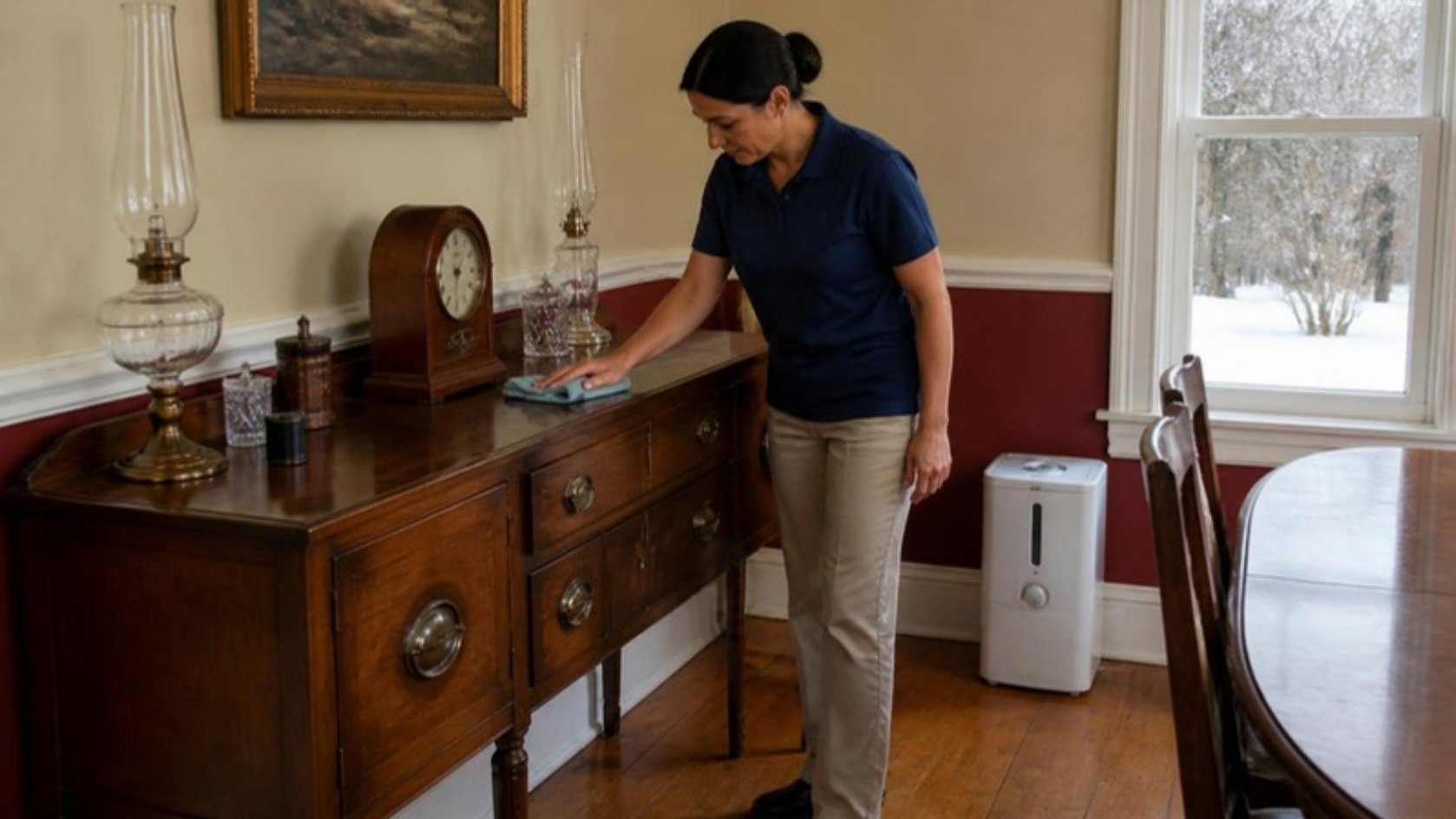
- Dust with a soft, dry or slightly damp microfiber cloth, following the grain.
- Avoid all-purpose sprays on fine finishes; they can leave residue or haze.
- Keep furniture out of direct paths of heat vents and away from radiators.
- Use coasters and trivets, especially during holiday entertaining.
Antiques and valuable pieces: follow guidance from a conservator or the maker. Professional house cleaners dust and wipe; restoration and refinishing are specialist work.
A word on humidity
Wood flooring and furniture makers often publish recommended indoor humidity ranges. If your home gets very dry in winter, a humidifier may help; check your flooring manufacturer's guidance for the right range.
Professional cleaning for homes with fine wood
When you request a cleaning, tell us about antique pieces, specialty finishes, and anything to leave alone. Our house cleaning includes dusting surfaces, baseboards, and trim, plus vacuuming and mopping suited to your floors. For tools and methods, see what professional cleaners use.
House cleaning in Bedford
We serve homes throughout the Town of Bedford, including Bedford Village, Bedford Hills, and Katonah. For local details, see our house cleaning page for Bedford, NY.
Winter wood care questions
How do I remove salt film from wood floors?
Sweep or vacuum grit first, then damp-mop with a cleaner made for your floor's finish using a well-wrung mop. Never soak wood floors.
How should I dust antique furniture?
Use a soft, dry or slightly damp microfiber cloth and follow the grain. For valuable antiques, follow a conservator's or the maker's guidance.
Does dry winter air affect wood floors?
It can. Many flooring manufacturers publish recommended humidity ranges; check yours and consider a humidifier if your home gets very dry.
Can house cleaners clean around antiques?
Yes. Tell us about antique pieces and specialty finishes when you book, and anything you would like left alone.