The short answer
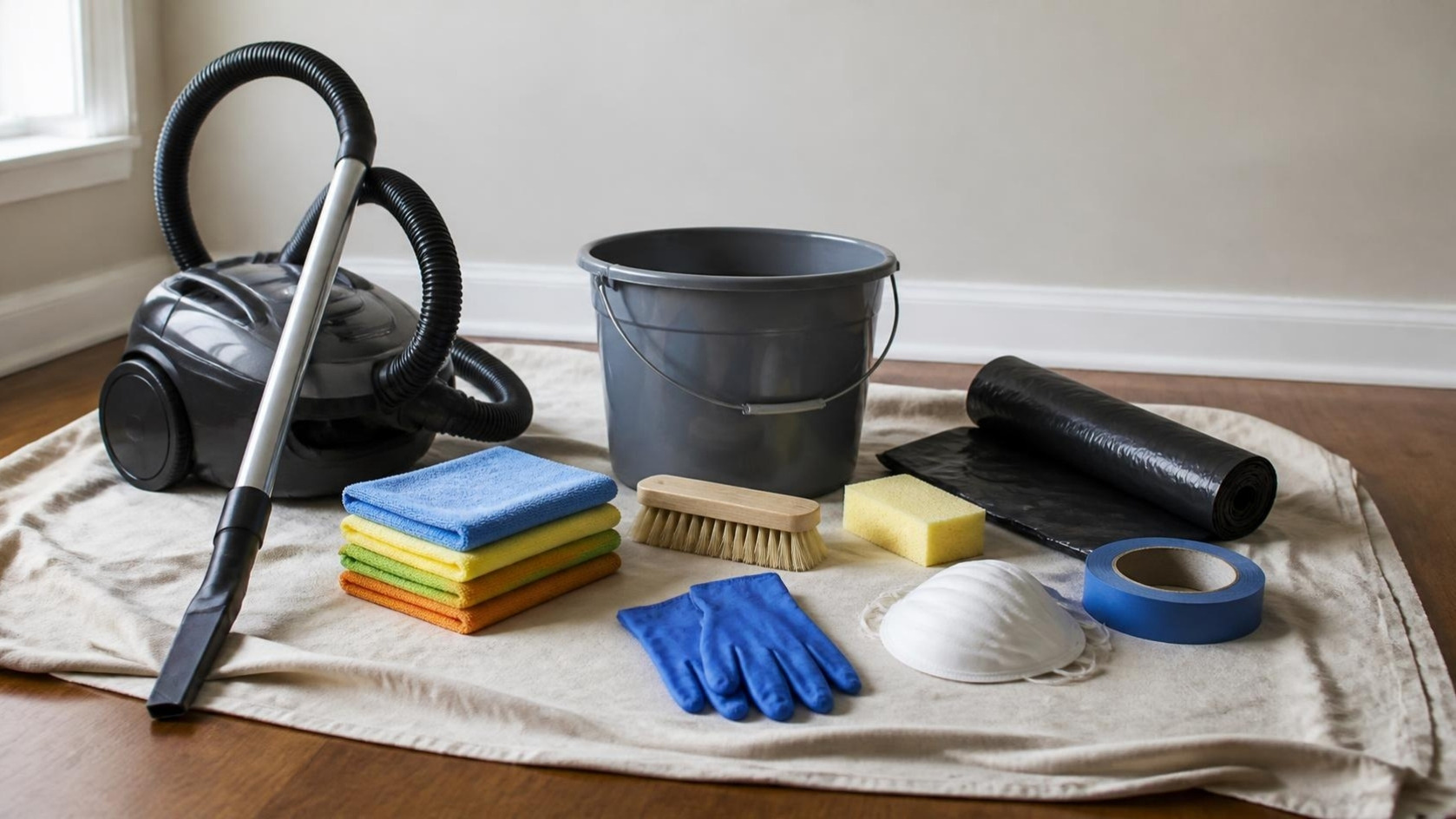
For post-renovation cleanup you need tools that capture fine dust instead of spreading it: a HEPA-filtered vacuum with crevice and brush attachments, plenty of microfiber cloths, a bucket, a soft brush, gloves, dust masks, and trash bags. Skip brooms and feather dusters, which send fine dust back into the air.
Small projects, like a bathroom refresh or a single room repaint, are often easy enough to clean up yourself. Having the right supplies before you start makes the difference between one pass and three. Here is a practical kit and how to use it.
Supplies checklist
Capture dust
- HEPA-filtered vacuum
- Crevice tool and soft brush attachment
- Spare vacuum bags or filters
Wipe and wash
- Microfiber cloths, more than you think
- A bucket and a mild cleaner suitable for your surfaces
- A soft brush and non-scratch pads
- A squeegee for glass
Protect yourself and the home
- Disposable dust masks and gloves
- Drop cloths and painter's tape
- Heavy-duty trash bags
- A step stool
How to use them
- Wait for the dust to settle. Fine dust keeps falling for hours after work stops.
- Top to bottom. Ceilings, walls, and fixtures first, floors last.
- Vacuum before wiping. A HEPA vacuum lifts dust; damp microfiber then picks up what is left. Wiping first smears it.
- Rinse cloths often. A dusty cloth just moves dust around.
- Do not forget hidden spots. Inside cabinets, door tops, window tracks, vents, and registers.
New finishes: fresh paint, new grout, sealed stone, and new hardwood can be sensitive. Check the manufacturer's care and cure-time guidance before using any cleaner.
What to avoid
- Brooms, feather dusters, and dry rags, which launch fine dust back into the air
- Abrasive pads on new fixtures, glass, or finished surfaces
- Mixing cleaning products
- Running the HVAC system without asking your contractor about the filter afterward
When to call in professionals
Bigger projects, such as kitchen remodels, additions, and whole-floor flooring installs, usually leave more dust than a household vacuum can handle in a reasonable time. Our post-construction cleaning uses HEPA-filtered vacuums and microfiber systems, works in a rough clean and a final clean, and coordinates with your contractor. A final detail clean for a 2,000 square foot home usually takes 6 to 10 hours.
For more on why renovation dust lingers, see how to get rid of dust after a renovation.
Order of work for a single room
- Remove debris. Bag scraps, packaging, and tape.
- Vacuum high. Ceiling corners, light fixtures, the tops of door frames and trim.
- Vacuum walls and sills. Use the soft brush attachment.
- Damp wipe. Walls if the paint has cured, then sills, trim, doors, and switch plates.
- Inside storage. Vacuum and wipe inside cabinets, drawers, and closets.
- Glass. Windows and mirrors with a squeegee or microfiber.
- Floors last. Vacuum thoroughly, then clean with a method suited to the flooring.
Renovation cleanup in Brookfield
We are based at 300 Federal Road in Brookfield and help with renovation cleanup across town, from Brookfield Center to homes near Candlewood Lake. For local details, see our post-construction cleaning page for Brookfield, CT.
Renovation supplies questions
What supplies do I need for a post construction cleaning?
A HEPA-filtered vacuum with crevice and brush attachments, plenty of microfiber cloths, a bucket and a mild surface-appropriate cleaner, a soft brush, non-scratch pads, a squeegee, gloves, dust masks, drop cloths, trash bags, and a step stool.
Should I use a broom after a renovation?
Avoid brooms and feather dusters. They push fine construction dust back into the air. Vacuum with a HEPA vacuum first, then wipe with damp microfiber.
Can I use regular cleaners on new finishes?
Check the manufacturer's care and cure-time guidance first. Fresh paint, grout, sealed stone, and new hardwood can be sensitive.
When should I hire post-construction cleaners?
For larger projects such as kitchen remodels, additions, or whole-floor installs, professional cleaning with HEPA equipment and a rough and final clean is usually faster and more thorough.