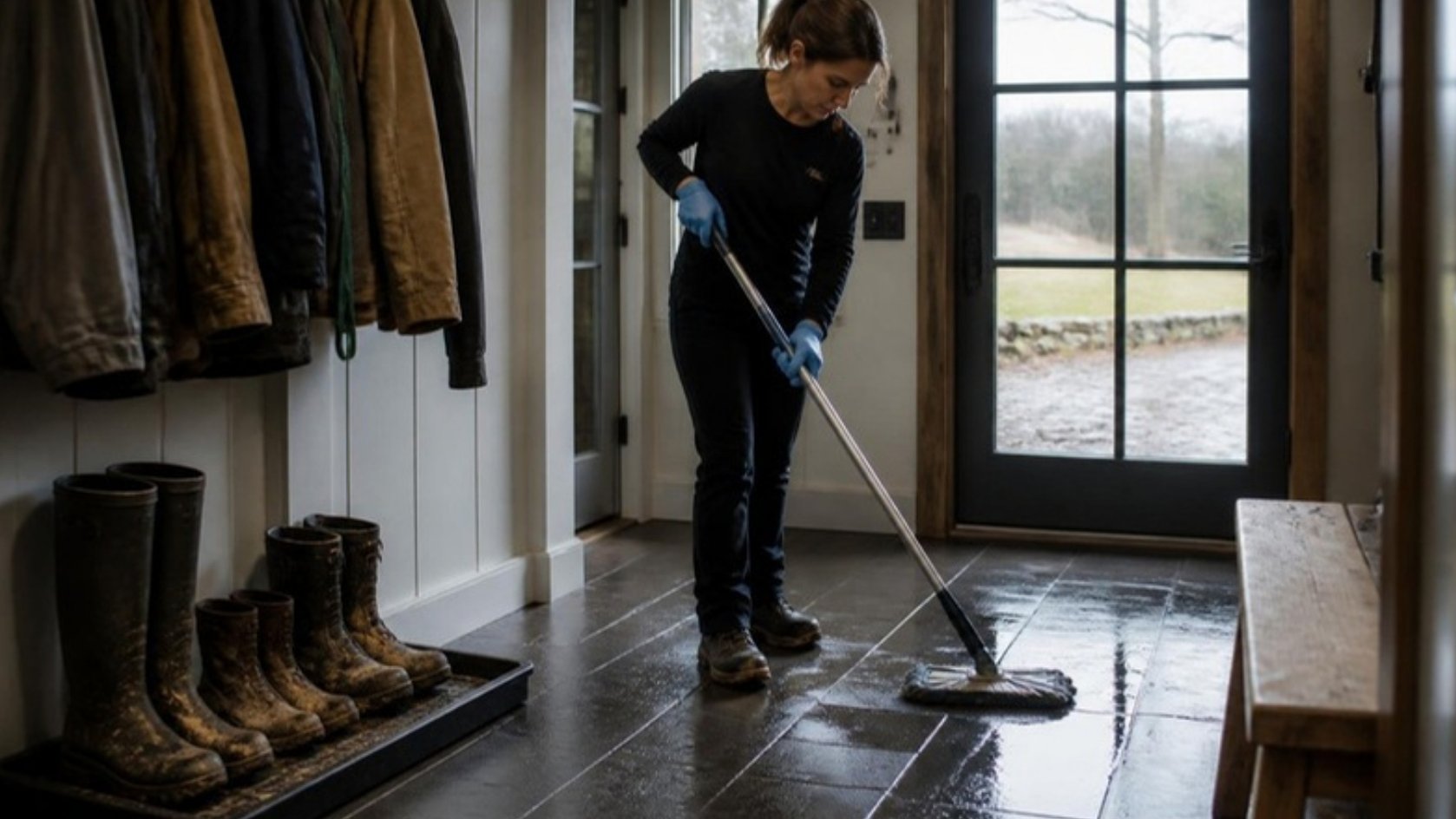
The short answer
Use two mats, a boot tray, and a shoes-off rule. Let mud dry, then sweep or vacuum before mopping, and clean the entry several times a week until the ground firms up.
Easton is a rural town, with homes along roads like Sport Hill Road, Center Road, and Morehouse Road, and villages like Aspetuck and Plattsville. When the ground thaws in March, long driveways, gardens, and trails turn soft. For a few weeks, mud comes in on every boot, paw, and wheel.
Stop it at the door
- A coarse mat outside to scrape off the worst.
- An absorbent mat inside to catch the rest.
- A boot tray with a lip, so wet mud stays contained.
- A towel by the door for pets' paws.
The right order
- Let wet mud dry. Wiping it wet spreads it.
- Sweep or vacuum dried dirt.
- Mop with a cleaner suited to the floor, changing water often.
- Shake out and wash mats as they fill.
Protect your floors
Grit acts like sandpaper on hardwood. Keep it off with mats and frequent sweeping, and avoid soaking wood floors. Stone and tile entries handle mud better but need grout attention. See our wood floor care guide.
Beyond the entry
Check stair edges, hall runners, and the path to the kitchen, where mud travels. Vacuum rugs more often until the season passes.
After mud season
Once the ground firms up, a spring deep clean resets the whole house. Our fall mud and leaves guide covers the autumn version.
House cleaning in Easton
We serve homes throughout Easton. Learn more on our house cleaning page for Easton, CT, or read our Easton hearth and mantel guide.
Mud season questions
Should I wipe up mud while it is wet?
Usually no. Let it dry, then sweep or vacuum before mopping, so it does not smear.
How do I protect hardwood floors from mud?
Mats at every door, frequent sweeping, and damp rather than wet mopping.
How often should I clean the entry in mud season?
Several times a week while the ground is soft.
Do you clean entries and mudrooms?
Yes. Entries and mudrooms are part of a regular visit. Tell us if they need extra time.